Small holes (under a few centimetres)
Small holes from nails, screws and wall anchors are cleaned of loose paper and filled with compound in thin coats. Anchors that are spinning or protruding are pushed in or removed first so the surface sits flat.
Even small fills shrink as they dry, so a second coat and light sanding are what make them disappear under paint.
Medium holes (doorknobs and impacts)
A doorknob or impact hole has broken board around the edge. The damaged area is trimmed back to solid gypsum, a backing support or patch piece is installed, and the seams are taped so the repair does not crack.
Adding a door stop after the repair prevents the same hole from returning in the same spot.
See also: Same-day drywall repair
Large holes and access openings
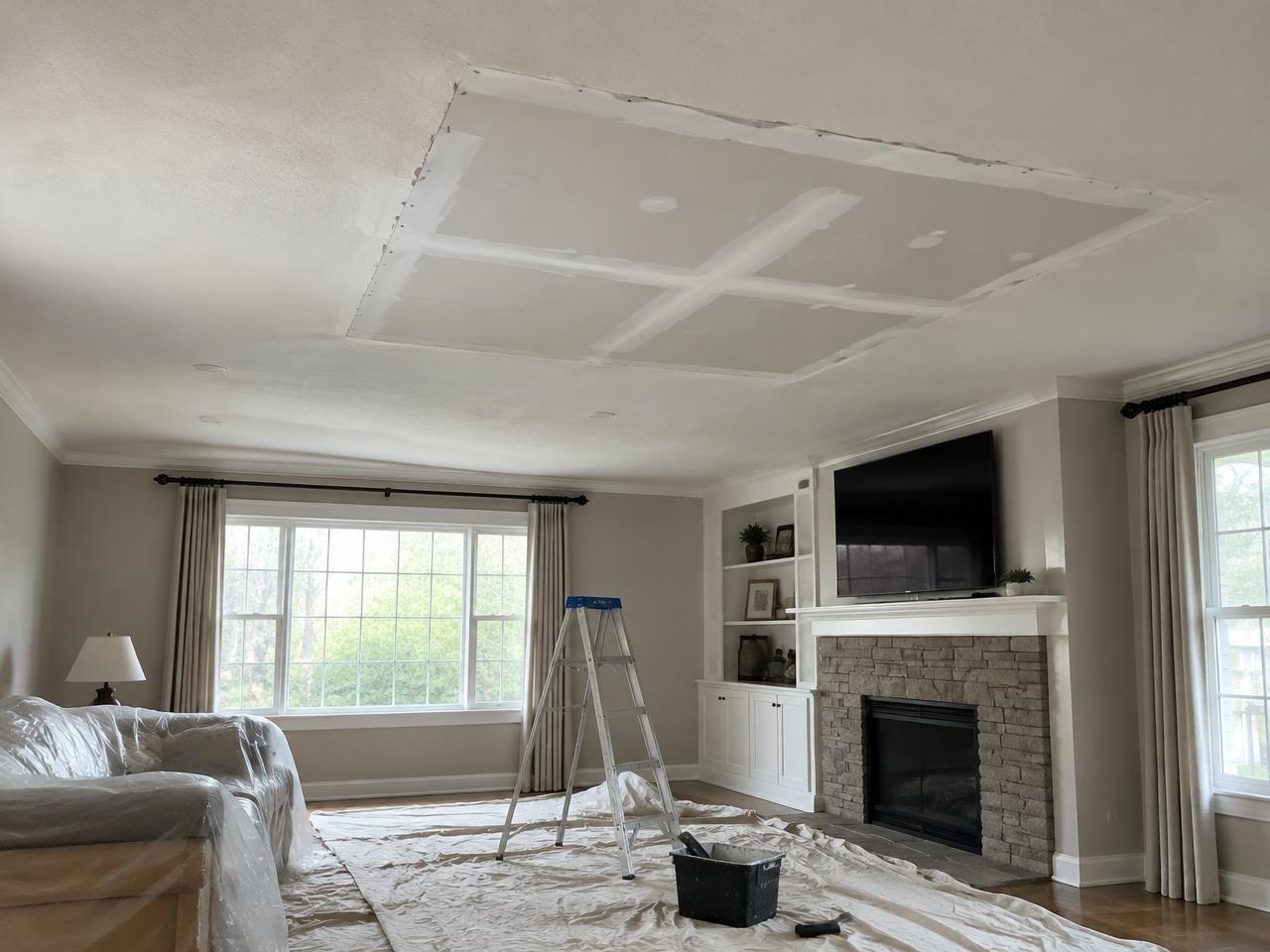
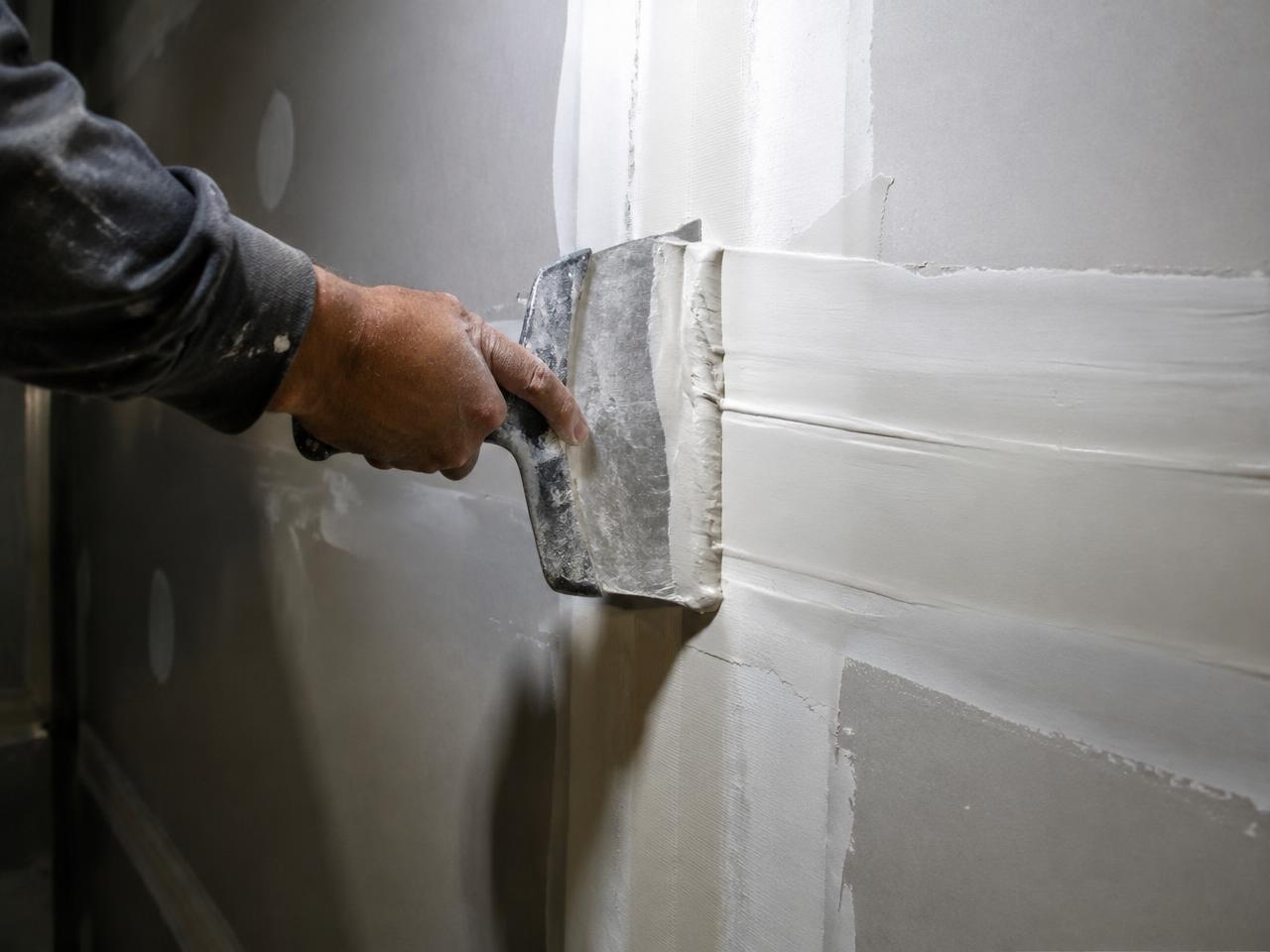
Large holes are cut square to the nearest framing or fitted with wood backing, then a new piece of drywall of the same thickness is screwed in. Every seam is taped and finished in stages, feathered wide so the patch blends into the wall.
Before closing an access opening, check that any plumbing or wiring work behind it is finished and inspected if required.